The Wedding Record
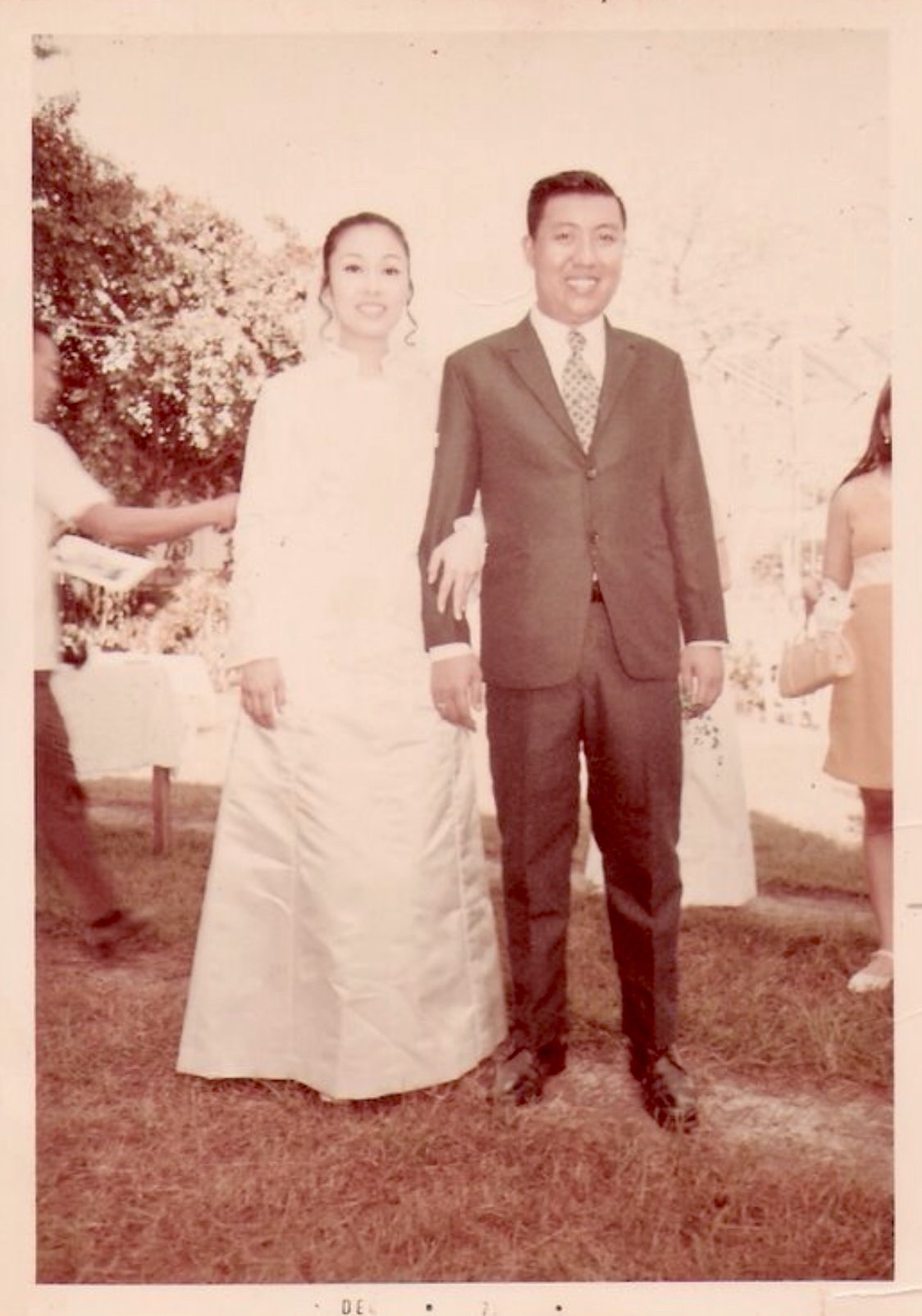
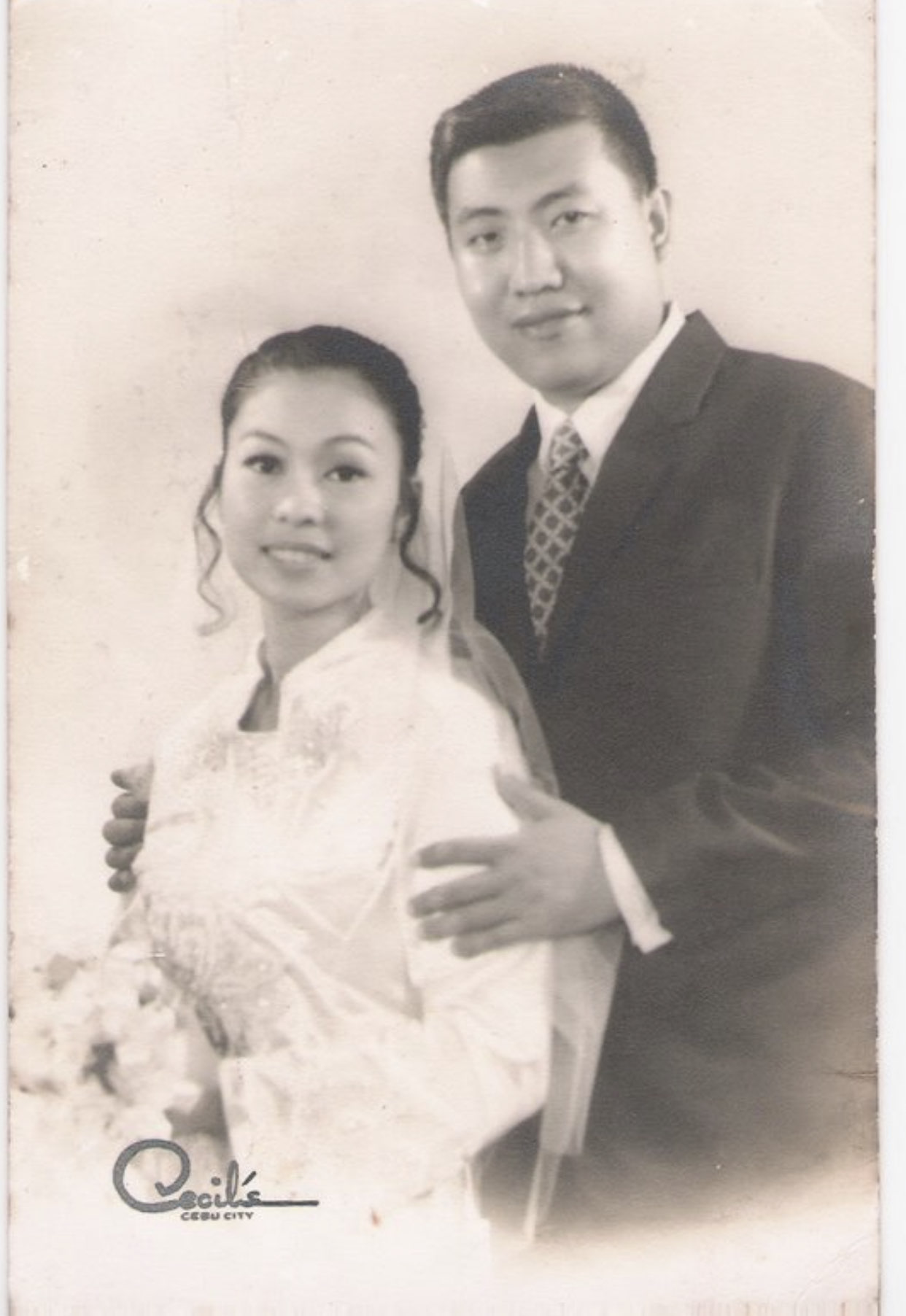
The wedding photographs are strong enough to become their own feature, but they should wait for confirmation of the bride, date, location, and visible relatives before specific captions are published.
The Cross & the Byline
The Life and Words of Manuel “Maning” S. Satorre Jr. · 1943–2023
In Loving Memory · A Special Edition
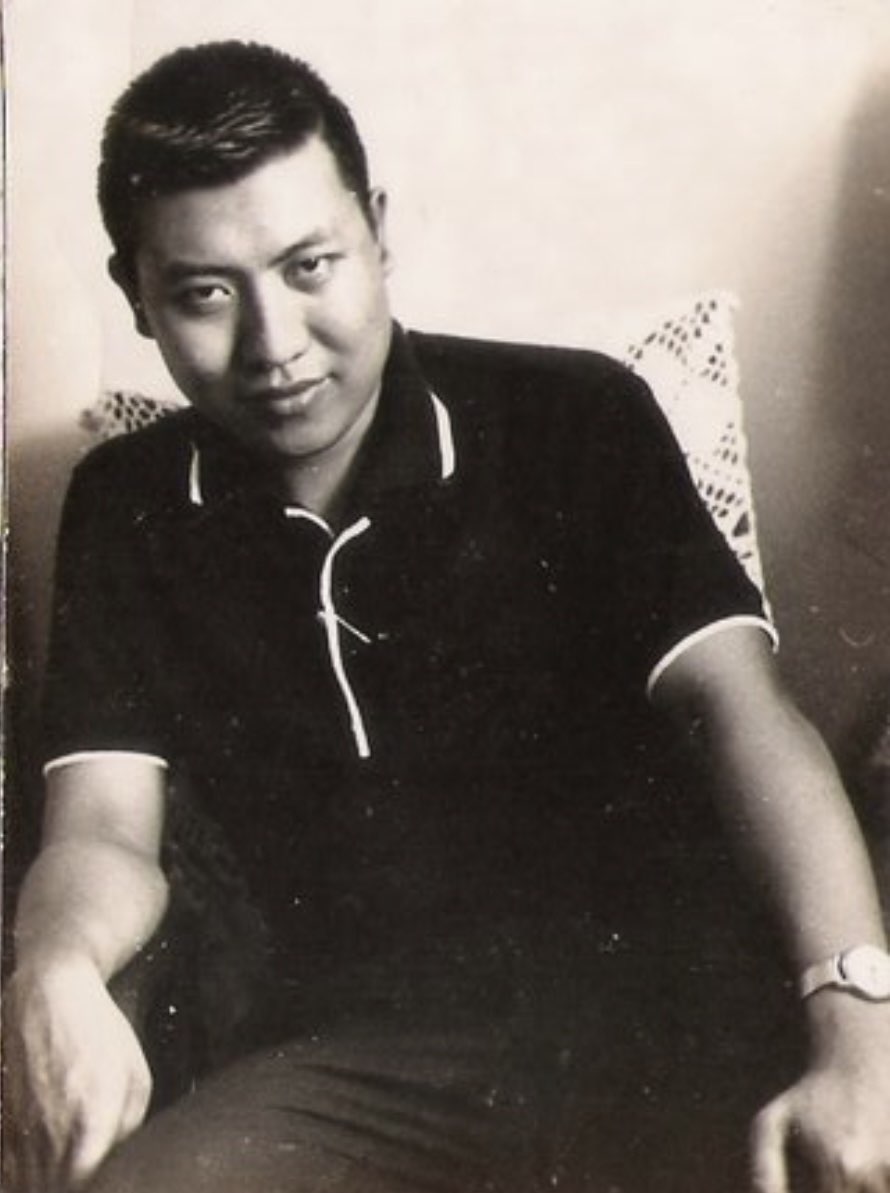
Manuel S. Satorre Jr. · 1943 – 2023 · Aged 80
He was, before anything else, a kid from Parian — the old quarter of Cebu where stone houses, church bells, and the long shadow of Magellan’s Cross taught him about faith, family, and memory. He grew up to spend a lifetime putting Cebu on the record: as a lawyer, journalist, editor, columnist, broadcaster, and environmental advocate whose byline carried the city’s news for more than six decades.
This special edition is for him — husband to Victoria, father to Jet, Jerome, and Mark, grandfather, brother, uncle, mentor, and Outstanding Carolinian. A documentary, a newspaper, and a family archive, all at once.
Section A · Parian Beginnings
Old Cebu, family roots, and the streets that raised him.
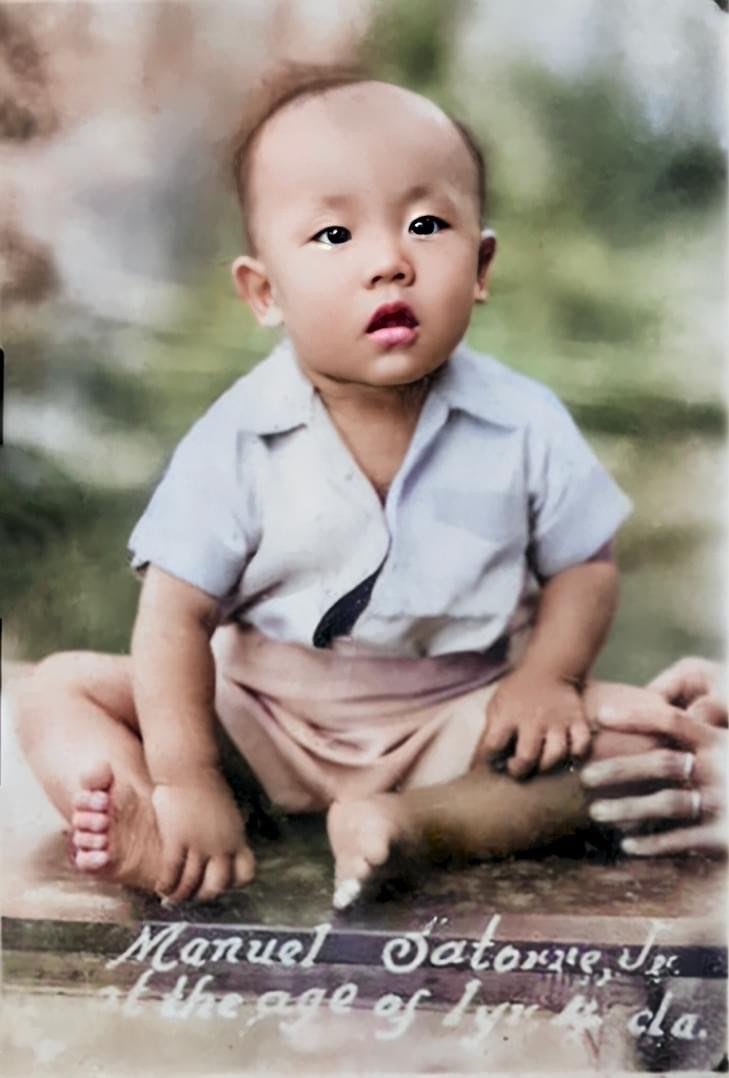
Born in 1943 in Cebu City, Manuel S. Satorre Jr. — Maning to family, Jun to friends, Junior on the masthead — came of age in Parian, the historic quarter at the heart of old Cebu. Parian was traders and clergymen, sailors and printers; it was incense in the morning, newsprint in the afternoon, and the bells of the basilica every evening. The grid of the old streets and the worn coral-stone of its houses would stay with him for the rest of his life.
He was a sharp, observant child in a city that rewarded sharp eyes. By 16, he was already working — not at his studies, but at a newspaper. The streets that raised him were the same streets he would later cover: Customs, the BIR, City Hall, the police beat. Long before he carried a press card, Parian had already taught him how to read a city.
Section B · The Cross
A moral compass anchored in Cebu’s oldest landmark.
A few blocks from Maning’s childhood streets stood Magellan’s Cross — planted in 1521, the city’s oldest symbol of faith and the place where Cebu’s long Catholic story begins. For a Parian boy, the Cross was not a tourist landmark. It was geography. It was a way of orienting yourself, morally and literally, inside Cebu.
Maning carried that orientation into the rest of his life. He wrote one of his earliest recorded pieces — “Cebu and the Santo Niño” in 1965 — about the same faith that had been quietly shaping him. Friends and family remembered his grounding: a man who believed in plain truth, owed loyalty to family first, and treated his word as a contract. The Cross stood behind everything else — the byline, the public voice, the long career — as the still point at the center of a busy life.
Section C · The Byline
Sixty years of journalism, editing, broadcasting, and the law.
He started at 16, as a proofreader for the Cebu tabloid Newsday. Within a year he was a cub reporter on the Customs, BIR, City Hall, and police beats. He wrote for the Morning Times and became the youngest correspondent for the Philippine News Service (PNS). He contributed to The Freeman in its weekly newsmagazine era. On the air, he worked stints at RMN/DYHP, Channel 13, Channel 3, and DYRC — and pioneered the first “Balita-Patrol” in Cebu, riding the DYHP Kombi with a Grundig tape recorder in his lap.
In 1967, still in his twenties, he founded View Magazine and the Cebu News & Information Service (CNIS). When Martial Law was declared in September 1972, both were shuttered — one of the quiet costs of his early ambition. He came back. In 1974 he organized the PNA Cebu bureau as its officer-in-charge, recruiting Henry Redula, Joe Martinez, Elma Abellanosa-Cartilla, and Manuel Oyson Jr.
Through the 1980s and 1990s he helped lead Vistas: The Weekly Newsmagazine as Editor and Business Manager, wrote a column for SunStar until 1990, and then moved on to help create and edit Newstime Daily. Colleagues remembered the rhythm of his newsroom: four articles a day, last-minute assignments, fast priorities — and a booming voice that could carry across a press room.
He was also a lawyer, and he wrote like one when he needed to: precise, on the record, willing to take the heat. In 1992 he was subpoenaed (and did not attend) a House committee hearing in Cebu on alleged “media corruption” — a small, telling moment in a career that never courted convenience.
Section D · The Cebu Beat
Press club president, columnist, and host of the city’s conversation.
In 1971, Maning was elected President of the Association of Cebu Journalists. He used the chair the way he used a byline — to make space. He hosted Senator Benigno “Ninoy” Aquino at ACJ fellowship meetings, brought national figures into Cebuano rooms, and that same year represented the Philippines on the U.S. Army-Pacific Friendship Mission to Hawaii. In 1972 he led a four-person Filipino media delegation to Taiwan.
Around Cebu he was unmistakable: a largely-built man with a booming voice, a black attaché case, dark glasses, and a light-blue VW Beetle (plates: 999) parked at whatever story needed him that day. He covered the city he came from with the seriousness of someone who never forgot it had raised him.
Section E · The Environmental Beat
From Cebu’s newsroom to the world conferences on the environment.
In his later career, Maning gave Cebu’s reporting a wider horizon. He founded and led the Philippine Environmental Journalists, Inc. (PEJI) as its President, and chaired the Asian Federation of Environmental Journalists. He served as the Southeast Asia Focal Point for the GEF-NGO Network under the IUCN World Conservation Union, putting Filipino voices into rooms where the region’s rivers, reefs, and forests were being discussed.
In October 1998, at the 6th World Conference of Environmental Journalists in Colombo, Sri Lanka, the Asia-Pacific Forum of Environmental Journalists awarded him the International Green Pen Award. His work was cited in publications by the Asian Development Bank (Water in Asian Cities) and JICA reports; in 1999 he authored “How Media can Help in Marine Environmental Protection and Management” for a PEMSEA workshop.
His argument, made for decades, was simple: the media tends to ignore environmental issues until there is an immediate tragedy. He pushed for journalist training programs that would change that — long before climate became daily news.
Section F · The Carolinian Legacy
Maning and Victoria, recognized by the University of San Carlos.
The University of San Carlos — one of the oldest universities in Asia — conferred the title of Outstanding Carolinian on both Manuel S. Satorre Jr. and his wife, Victoria Ang-Satorre, the former Dean of the College of Commerce. It is an unusual distinction: husband and wife, in the same family, honored as exemplars by the same institution that shaped them.
For Cebu’s Carolinian community, the two were a single legacy — education on one side of the breakfast table, journalism on the other, faith threaded through both. The honor belongs to the family and to USC equally.
Section G · Family Edition
The public voice of Cebu came home as husband, father, grandfather, brother, uncle, and steady family anchor.
Maning was husband to Victoria, father to Jet, Jerome, and Mark, and grandfather to a family that stretched across Cebu and across an ocean. He was also a brother, uncle, mentor, and family anchor — the person whose voice on the line steadied a room.
Away from the newsroom, the archive becomes quieter and more intimate: wedding portraits, children on porches, family tables, living-room gatherings, and travel photos kept close by the people who loved him. These images show a different edition of the same life. The byline belonged to Cebu, but the daily story belonged to family.
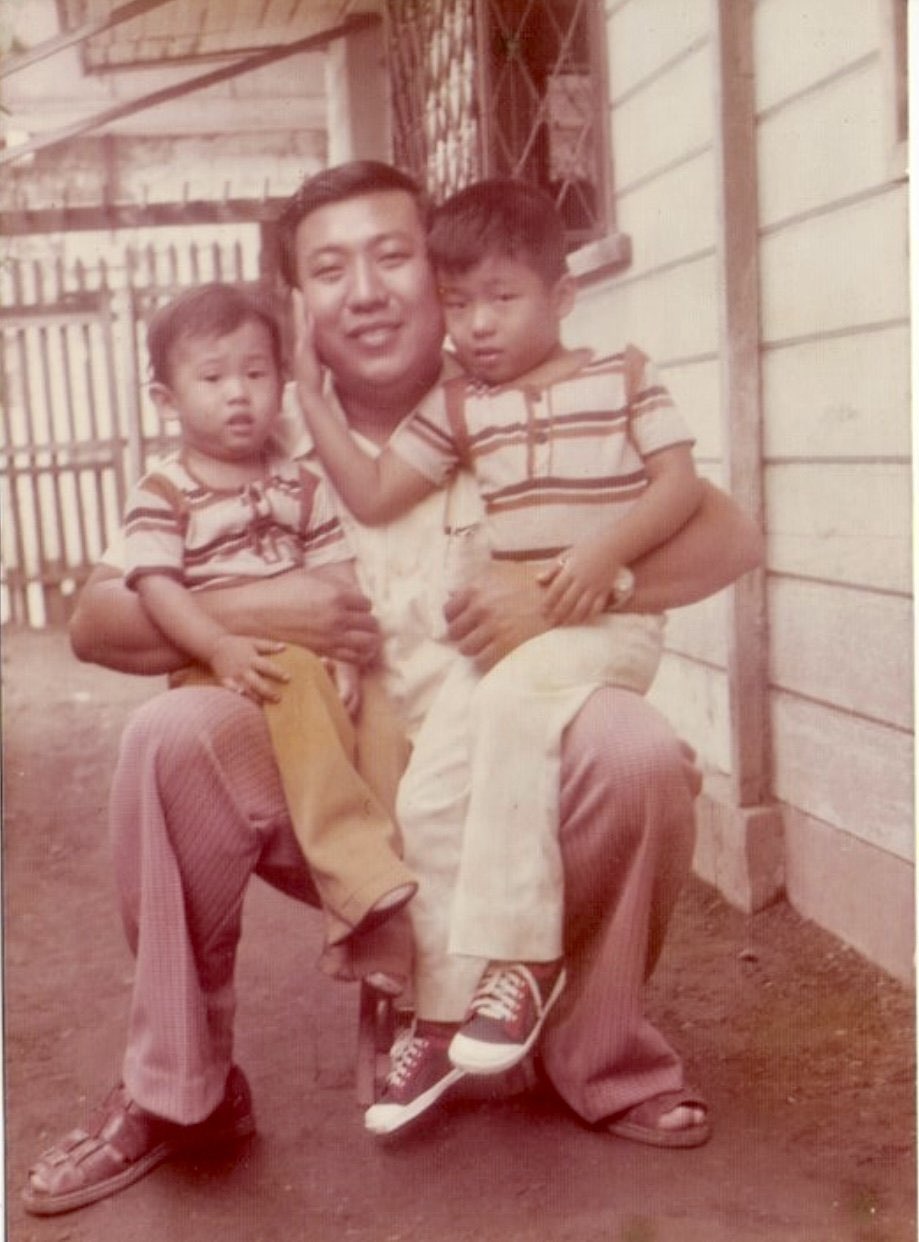
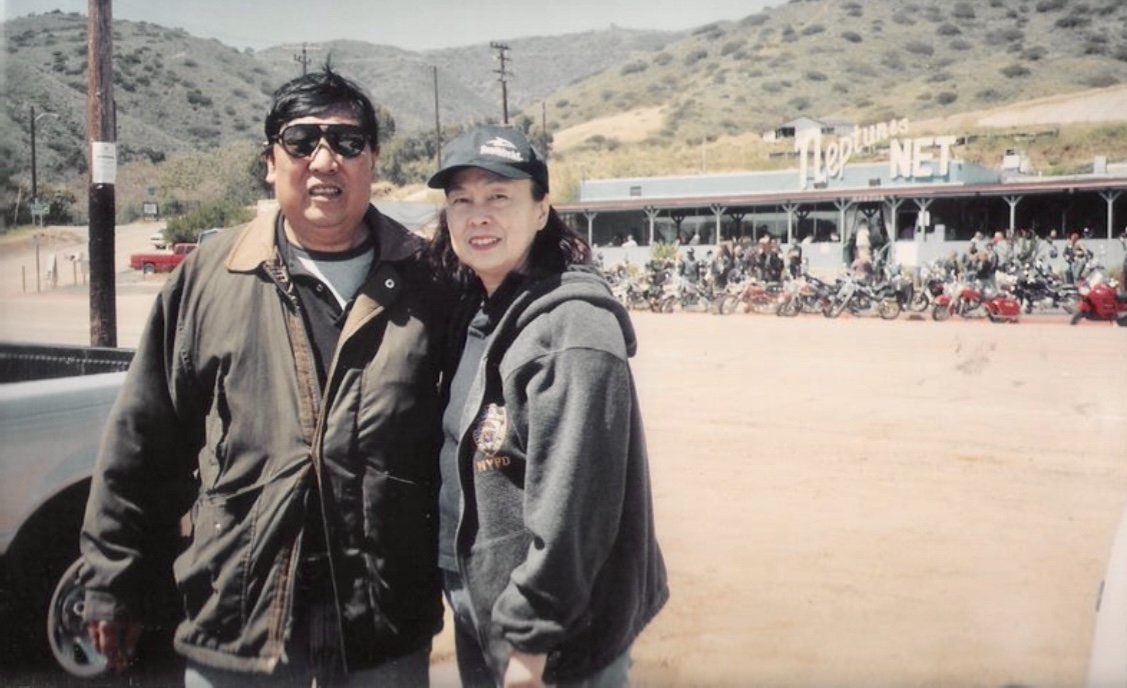
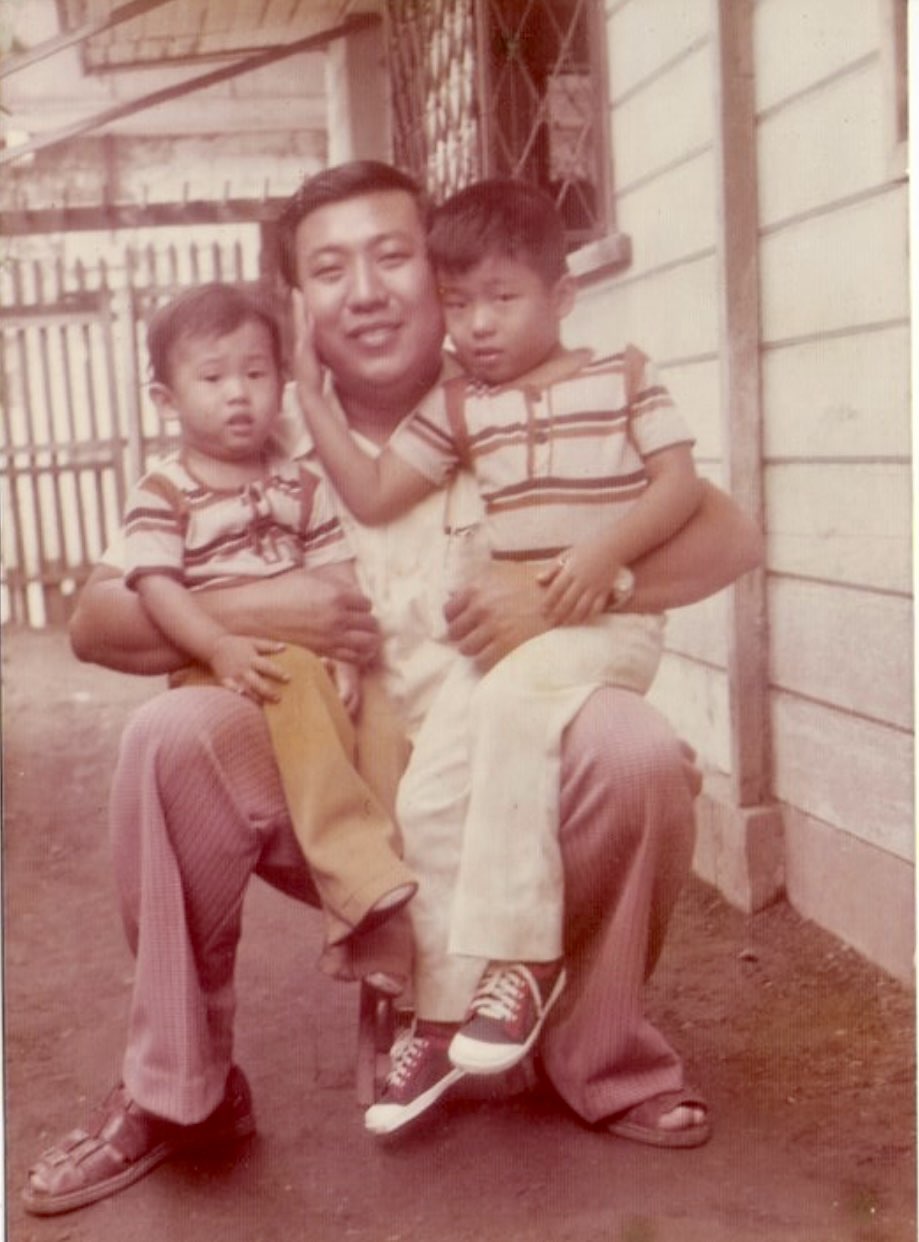
At home he was famously demanding of deadlines — four articles a day was not a metaphor — but family came first under the noise. He drove a light-blue VW Beetle (plates: 999), carried a black attaché case, and made room at his table for every kid who wandered in.
The wedding photographs are strong enough to become their own feature, but they should wait for confirmation of the bride, date, location, and visible relatives before specific captions are published.
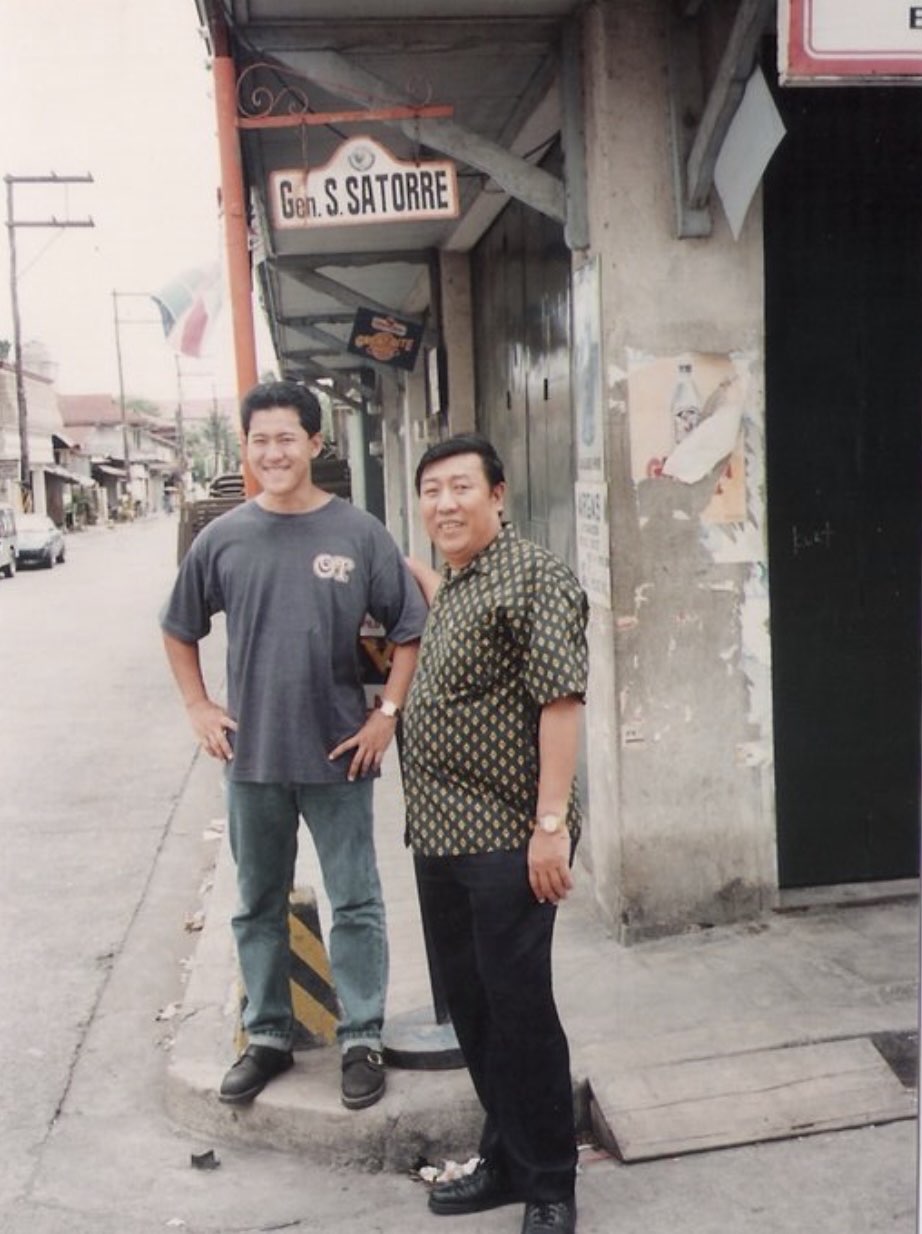
The Gen. S. Satorre street-sign image points beyond biography into family history and civic memory. It should remain review-only until the location, the other person in the photo, and the family connection are confirmed.
Section H · Travel Dispatches
San Francisco, Beijing, and Paris in the family archive.
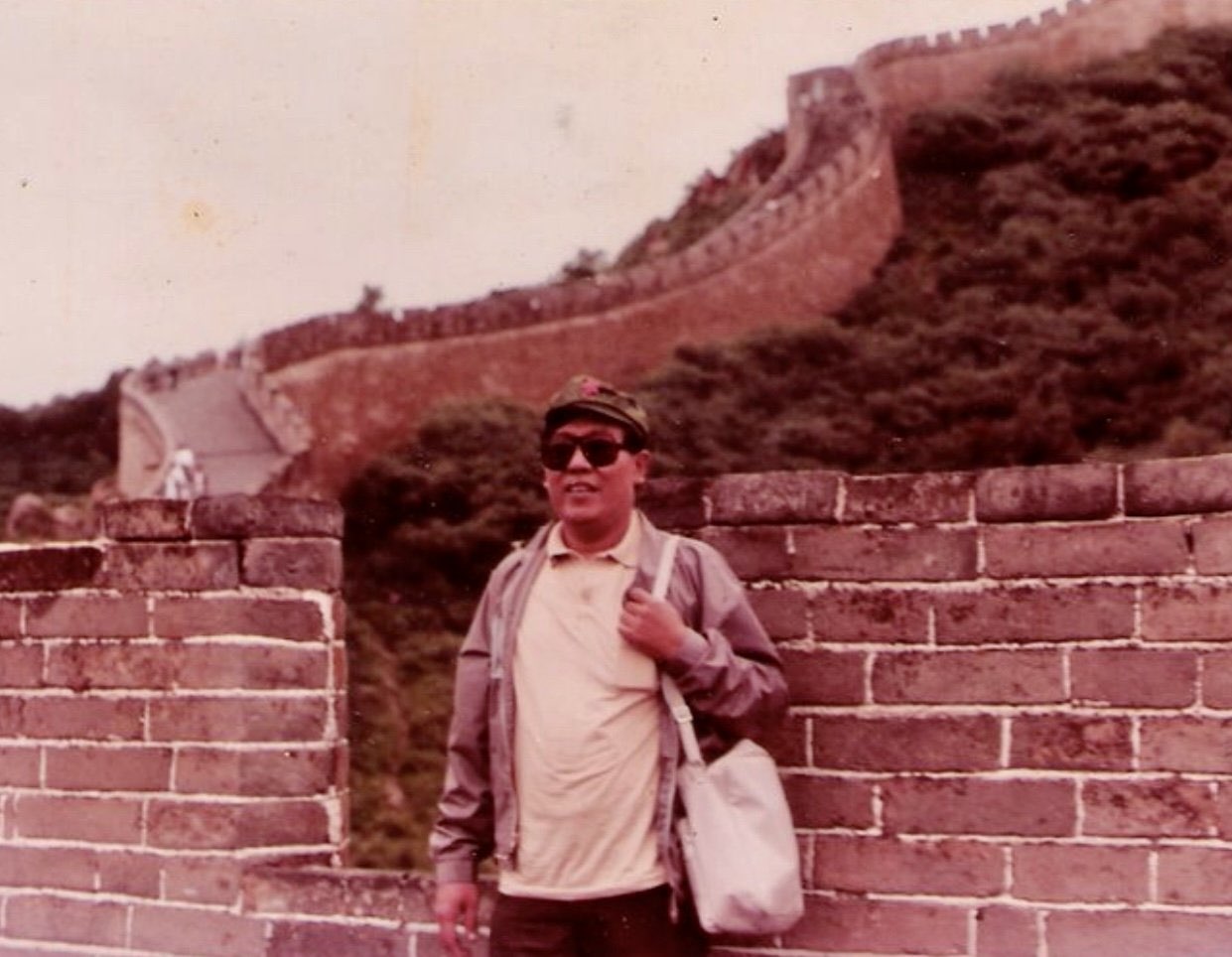
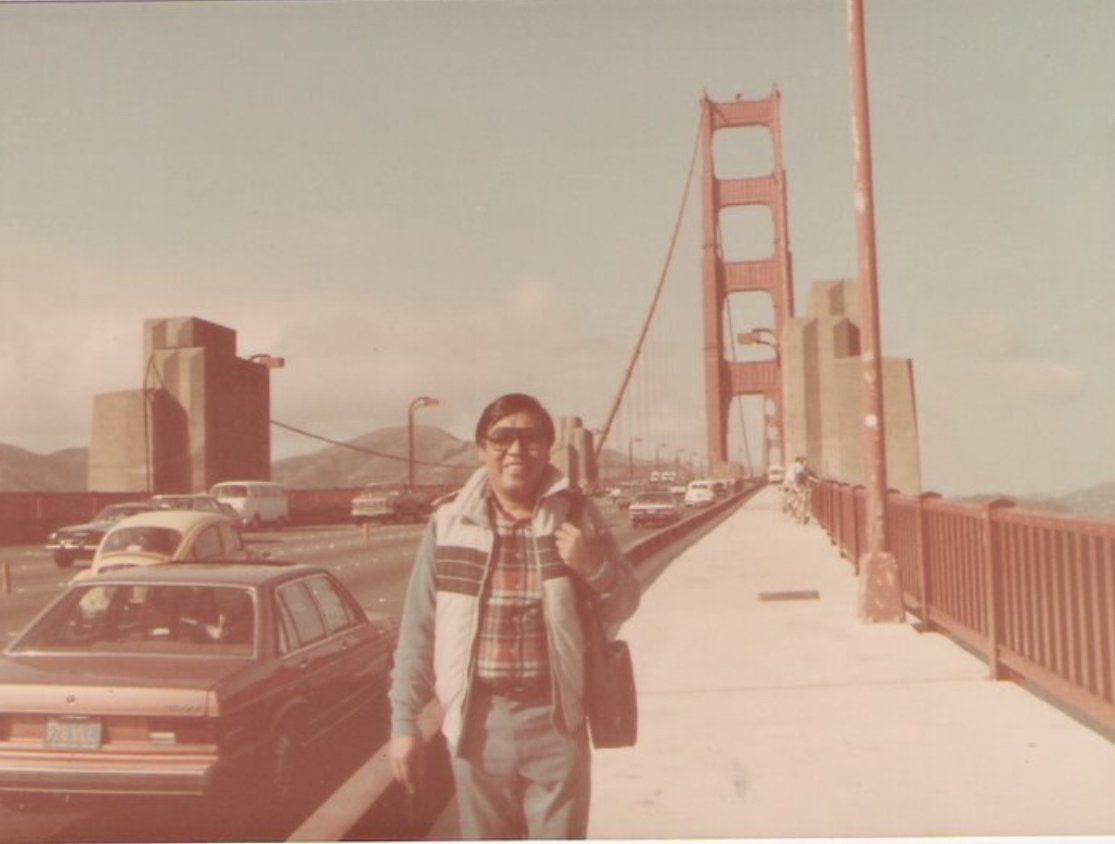
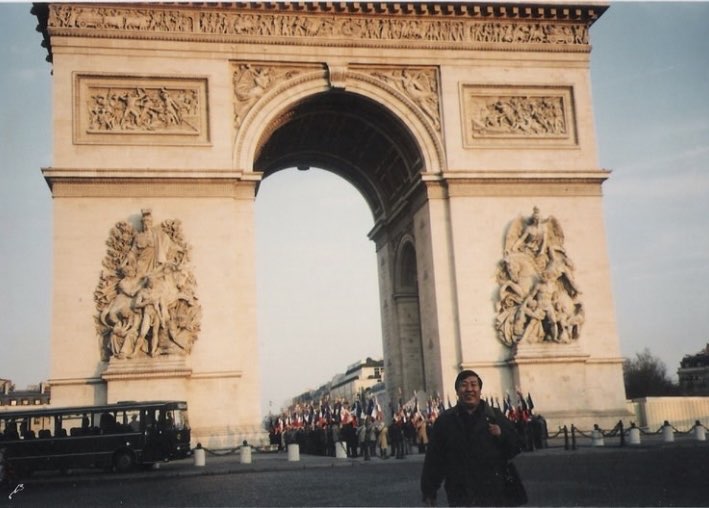
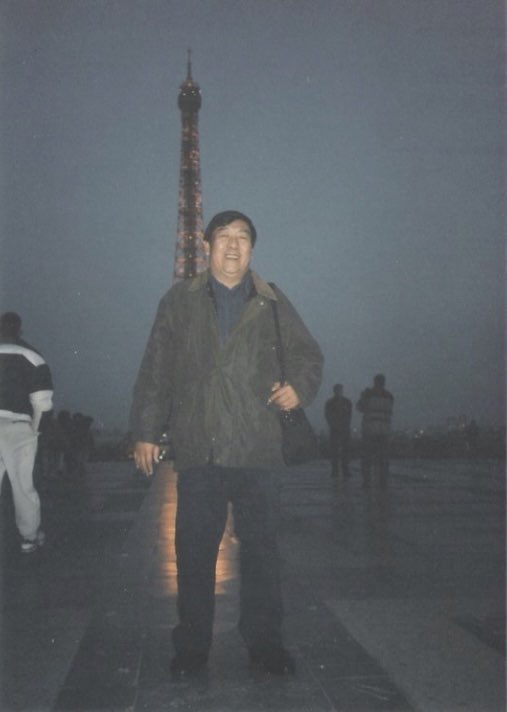
The travel photographs give the memorial a wider map without losing the newspaper theme. Golden Gate and the Great Wall already belong naturally to the public story; the Paris images extend the same visual thread as family-archive dispatches. The captions stay careful until the family confirms years and trip purpose.
Section I · The Archive
A working archive of his words and work. To be expanded as the family adds to it.
Photos, columns, broadcasts, videos, awards, and family documents will be added here as the family contributes. If you have a clipping, recording, or photograph of Maning, please reach out so we can include it.
Section J · On the Record
For family, friends, colleagues, Carolinians, and the Cebu community.
This is the guestbook page — a place to share a memory, a story, a column you remember, or a moment with Maning that you want kept on the record.
He taught a city how to read itself. Cebu was his beat, but his real story was always faith and family. — The Satorre Family
Family, friends, colleagues, Carolinians, journalists, and the Cebu community are invited to share a memory.
Guestbook — Coming Soon